


Backup Power Solutions for Data Centers:Choosing Reliable Diesel Gensets
Views: 0 Author: Site Editor Publish Time: 2026-08-25 Origin: Site


In an industry where high availability is critical, facility managers face constant pressure to keep operations running. The financial and reputational damage caused by sudden data‑center outages remains substantial. Mission‑critical standby power should be treated as a core facility investment rather than an afterthought. Today’s electrical grid is undergoing rapid transformation, and alternative‑energy technologies keep maturing across the sector. Even so, certain industry fundamentals stay unchanged. High‑capacity equipment forms the foundation for fault‑tolerant, continuous power supply, upon which facilities heavily rely during catastrophic grid failures. This guide offers a vendor‑neutral, engineering‑driven evaluation framework to help you assess and select reliable on‑site generation equipment. You will learn how to satisfy strict service‑level agreements and address rigorous compliance requirements. Applying these technical criteria can help maintain continuous operations during prolonged utility-power outages. Read on for sound engineering solutions for your digital‑infrastructure deployments.
Key Takeaways
Performance Drives Selection: Transient‑response times and block‑loading capabilities are vital metrics for preventing server disruption during grid‑source transfer.
Total Cost of Ownership (TCO) Goes Beyond CapEx: Long‑term operational viability hinges on fuel maintenance, cooling infrastructure and rigorous load‑bank‑testing protocols.
Evolving Emission‑Compliance Rules: Deploying Hydrotreated Vegetable Oil (HVO) and EPA‑compliant tier‑rated equipment enables facilities to balance sustainability goals with mission‑critical reliability.
Scalability Calls for Architectural Foresight: Hyperscale and colocation sites must adopt N+1 or 2N redundancy models from the design phase to achieve Uptime Institute Tier III/IV certification.
The Foundation of Mission‑Critical Uptime for Data Centers
To frame business requirements accurately, you must quantify the true cost of downtime. Revenue losses escalate by the minute during outages, while SLA penalties rapidly erode operating budgets. Unexpected power failure places severe stress on precision on‑site hardware. Abrupt cooling‑system shutdown subjects servers to intense thermal shock, and unplanned shutdowns accelerate degradation of hard drives and processors. This justifies capital expenditure on robust backup‑power solutions. Well‑engineered power systems stop cascading failures across critical server racks and safeguard brand reputation in highly‑competitive markets.
Most modern‑facility designs align with Uptime Institute Tier standards. Tier III requires concurrently‑maintainable infrastructure layouts: any power component can be safely isolated for routine repairs without disrupting critical IT loads. Tier IV specifies fully fault‑tolerant physical architecture, where a single catastrophic fault will not impair server operations. These Tier classifications address the availability and redundancy of critical power infrastructure. Data-center designs must meet the applicable requirements for their target Tier level.
Many inexperienced designers overestimate UPS performance. UPS systems provide temporary bridging power, with runtime typically ranging from several minutes to longer periods depending on the system design and battery capacity. Data centers need seamless transfer to on‑site mechanical generators. If prime engines fail, UPS batteries drain quickly, and total site shutdown becomes unavoidable.
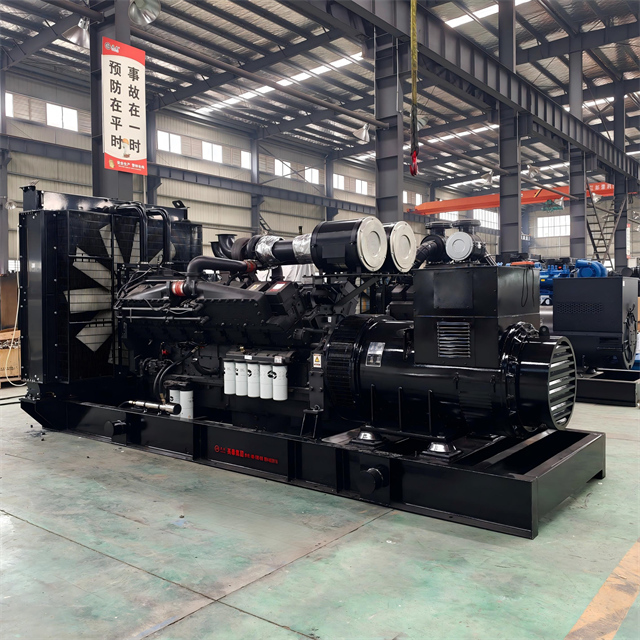
Core Engineering Metrics for Evaluating Diesel Gensets
Transient Response and Block Loading
Engineers need to carefully assess initial load‑acceptance performance. Units should be evaluated for their ability to accept significant block-load steps while maintaining voltage and frequency within the required limits. Server power supplies are highly sensitive to sudden frequency dips. Under‑performing alternators may trigger cascading hardware failures across the data floor, and slow‑acting engine governors can cause complete unit stall. Excellent transient‑response performance prevents server interruptions during grid‑transfer events. Industry standards provide solid benchmarks for these key performance indicators.
Power Density and Footprint
Evaluate megawatt output per unit of floor area. Commercial‑ and industrial‑zone real‑estate costs remain high. High‑power‑density hardware reduces required outdoor installation space. A smaller generator yard delivers meaningful long‑term cost savings. Compact layouts free up more floor space for revenue‑generating server racks and maximize facility yield.
Redundancy Architectures and Scalability
Compare N, N+1 and 2N distributed‑redundancy configurations. N delivers only the absolute minimum required capacity. N+1 adds one extra backup unit for safety. The 2N model features fully duplicated, independent power systems. Ensure selected units support efficient on‑site paralleling. As facility capacity grows over time, paralleling allows new power modules to be added without full redesign of the main electrical backbone.
Fuel Strategies: Diesel and Alternatives for Data‑Center Backup‑Power Systems
Natural Gas versus Diesel
Prime‑mover‑fuel selection is a long‑standing industry debate. Natural gas can offer a reliable pipeline supply under normal operating conditions and lower local emissions during extended runtime. Nevertheless, liquid fuels provide superior volumetric‑energy density, much faster emergency startup, and independence from vulnerable municipal utility pipelines. Earthquakes and severe winter weather frequently disable natural‑gas pipelines. On‑site liquid‑fuel storage guarantees full operational autonomy during large‑scale natural disasters.
Prime Mover Configuration Profile
Evaluation Metric | Onsite Liquid Fuel | Pipeline Natural Gas |
|---|---|---|
Emergency Startup Speed | Under 10 seconds | 15 to 30 seconds |
Volumetric Energy Density | Very High | Moderate |
Disaster Autonomy Level | Excellent (Local Storage) | Vulnerable to utility cuts |
Local Emission Output | Higher (Unless using HVO) | Generally Lower |
Closing the Emissions Gap with HVO
Strict environmental regulations heavily shape facility planning. Urban air‑quality rules place tight limits on exhaust output. Hydrotreated Vegetable Oil (HVO) can help reduce emissions, and many modern diesel engines are approved for HVO use without hardware modifications. It delivers large reductions in net‑carbon and particulate emissions, while preserving mission‑critical reliability, helping facilities hit demanding sustainability targets.
Deployment Realities and Operational Risks
Fuel Storage and Degradation Management
Stored liquid fuel degrades naturally over extended periods. Water ingress and microbial contamination are persistent threats for long‑term storage tanks. Contaminated fuel clogs engine filters during emergency startup. Deploy automated fuel‑polishing systems and enforce rigorous chemical‑testing schedules for all on‑site tanks. Regular laboratory analysis guarantees fuel remains fit for immediate combustion.
Thermal Management and Airflow
Megawatt‑class engines generate substantial heat under continuous operation. Poor ventilation triggers immediate power derating or thermal shutdown. Pay close attention to radiator sizing and acoustic‑canopy ventilation. Extreme ambient temperatures compound thermal‑management challenges. Proper airflow modelling ensures units deliver full rated output. Hot exhaust must be safely routed away from fresh‑air intakes.
The Risk of Wet Stacking
Backup units often run at light loads during testing, causing unburned‑fuel accumulation inside exhaust systems — a hazardous condition known as wet stacking. Carbon deposits restrict exhaust flow and degrade overall engine efficiency. Routine use of built‑in or external load banks is mandatory for full‑load commissioning and maintenance testing. Burning off excess carbon keeps engines fully operational.
Vendor Shortlisting: Procurement and Lifecycle‑Support Criteria
Long‑term success depends on looking beyond datasheet specifications. Review real‑world performance data from operating facilities. Theoretical power ratings do not tell the full operational story. Request case studies from vendors covering comparable hyperscale‑load profiles. Thoroughly investigate each vendor’s local‑technician network, guaranteed emergency‑parts‑delivery response times, core‑maintenance capabilities and technical‑certification levels. Fast repair turnaround shortens vulnerability windows after component failures.
Global‑supply‑chain bottlenecks heavily affect heavy‑industrial‑equipment procurement. Build long lead‑times into expansion timelines. Delayed hardware deliveries push back commissioning and interrupt revenue generation. Confirm manufacturing schedules and obtain firm delivery commitments early. Mandate rigorous Factory Acceptance Testing prior to shipment. Vendors must document testing under simulated site‑load conditions.
Key procurement steps to follow:
Accurately audit current and projected electrical‑load profiles
Define the exact redundancy tier required for your client requirements
Request documented test reports from all short‑listed manufacturers
Verify local‑support capacity and emergency‑spare‑parts availability
Conclusion
Selecting reliable equipment requires a balanced, strategic approach. Weigh instantaneous transient‑response performance against long‑term operational sustainability, and evaluate physical footprint alongside environmental‑compliance pathways. First, accurately audit projected load profiles to avoid under‑sizing. Define required redundancy tiers early in design. Engage manufacturers that provide fully transparent test data, and secure firm lifecycle‑support commitments before issuing purchase orders. Following these proactive measures protects continuous facility operation and shields clients from catastrophic data loss and severe financial harm.
FAQ
Q: How do you size a data‑center diesel generator correctly?
A: Calculate total IT load plus facility‑cooling load. Multiply the sum by your expected Power‑Usage‑Effectiveness factor. Add a substantial safety margin for future hardware expansion. Account for leading‑power‑factor characteristics from modern servers. Accurate sizing prevents dangerous overload events during grid‑transfer sequences.
Q: Can existing diesel gensets be modified to run on HVO?
A: Most modern engines safely support HVO. This paraffinic fuel meets EN 15940 and serves as a drop‑in replacement without mechanical changes. Always review manufacturer‑warranty documentation to confirm compatibility and avoid unintentional warranty voidance.
Q: What is the typical service life of a data‑center diesel generator?
A: With proper maintenance, a well-designed standby generator can remain in service for 20 years or more, although actual service life depends on operating hours, maintenance history, load profile, and the engine manufacturer's specifications. Service life depends heavily on disciplined preventive‑maintenance regimes. Regular load‑bank testing mitigates wet‑stacking risks. Good care preserves dependable engine performance for decades.


