


Diesel Generators for Desert Environment: Key Features & Real‑world Applications
Views: 0 Author: Site Editor Publish Time: 2026-09-16 Origin: Site


Operating off-grid infrastructure in arid regions presents dual threats to continuous power. Extreme ambient heat and abrasive airborne particulate matter constantly challenge equipment stability. Standard standby or prime power units suffer heavily under these severe conditions. They face rapid heat derating, clogged intakes, and premature engine wear when deployed in desert climates. These ongoing failures lead to unacceptable downtime and severely inflated maintenance costs.
We provide project managers and procurement engineers an evidence-based framework for remote power projects. You will learn how to evaluate, specify, and source reliable equipment effectively. This technical guide highlights diesel generators for desert environment optimized for extreme operations. Our focus remains on proven engineering upgrades and smart procurement strategies. You can use these insights to guarantee operational continuity in the harshest environments on earth.
Key Takeaways
Extreme ambient temperatures require specific radiator sizing and cooling capacities to prevent power derating and unexpected shutdowns.
Multi-stage air filtration and specialized enclosures are non-negotiable for preventing sand abrasion and internal component failure.
Procurement decisions must weigh upfront capital costs against the long-term logistical realities of remote camp maintenance and fuel consumption.
Evaluating a supplier's regional support network and compliance with international manufacturing standards is as critical as the hardware specifications.
The Reality of Desert Operations: Defining Success Criteria
The Derating Threat
Internal combustion engines require dense, cool air for optimal performance. Desert environments eliminate this density. Ambient temperatures frequently rise above 40°C (104°F) during peak daytime hours. Standard engines naturally lose power output under these extreme conditions. Engineers call this phenomenon thermal derating. High heat degrades the combustion process significantly. It places immense thermal stress on internal engine blocks. Manufacturers usually calculate standard power ratings at 25°C. Every degree above this baseline threshold reduces actual electrical output. You must account for this power loss during your initial site load calculations.
The Particulate Challenge
Fine dust and sand act like aggressive sandpaper inside machinery. They easily bypass standard single-stage filters. These abrasive particulates quickly enter the engine lubrication system. They cause rapid piston rings and cylinder liner wear. Airborne sand also chokes air intake efficiency. It limits available oxygen for combustion and increases fuel burn rates. Alternator winding insulation faces identical risks. Micro-dust heavily coats these sensitive electrical components. This blanket of dust prevents proper heat dissipation and eventually causes catastrophic electrical shorts.
Remote Maintenance Realities
Mechanical failures in off-grid locations mean much more than broken parts. They represent consecutive days of lost operational productivity. Remote camps require notoriously long mobilization times for service technicians. You cannot simply dispatch a local repair crew. Procurement teams must frame this business problem correctly. A cheap generator failing in the desert destroys project timelines. You must design and specify systems for supreme mechanical reliability. High-quality components reduce the sheer volume of mandatory site visits.
Core Engineering Specifications of a High Temperature Generator Set
Advanced Cooling Systems
A true high temperature generator set requires extensive thermal management upgrades. Standard radiators boil over rapidly in arid zones. You need specific components engineered for 50°C+ (122°F) ambient temperatures.
Oversized Radiators: Engineers must significantly increase the cooling surface area. Larger cores dissipate heat faster.
Upgraded Cooling Fans: Desert units require high-pitch fan blades. These move a higher cubic feet per minute (CFM) volume of air.
High-Capacity Water Pumps: Faster coolant circulation prevents localized boiling inside the engine block.
Optimized Coolant Flow Designs: Modified internal passages eliminate thermal dead zones inside the engine block.
Robust Housing & Anti-Corrosion Needs
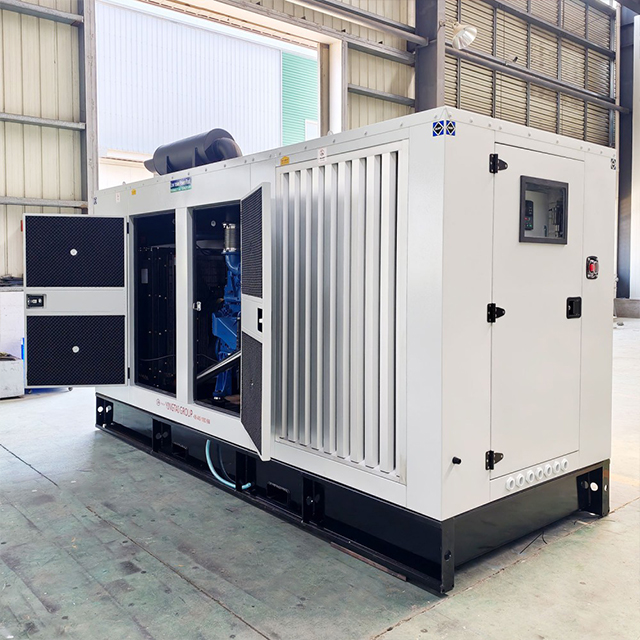
You might assume deserts lack moisture. However, nighttime temperatures drop rapidly in arid regions. This extreme fluctuation causes heavy morning condensation. Bare metal rusts surprisingly fast under these daily cycles. Specifying an anti-corrosion generator enclosure is absolutely vital. Factories must use thick galvanized steel for the canopy structure. Heavy-duty powder coating provides the primary defensive layer against sandstorms. Stainless-steel hinges and weather-sealed door locks prevent rust from locking maintenance panels shut.
Acoustic Management without Heat Trapping
Personnel camps demand low noise levels. However, soundproofing materials often trap dangerous amounts of heat. Designing a silent diesel generator for desert use requires careful balancing. Engineers must achieve noise attenuation without restricting airflow. Smart designs utilize baffled air intake tunnels. These acoustic tunnels block escaping sound waves but allow massive air volumes to pass freely. You avoid internal heat soaking while keeping the camp quiet for sleeping workers.
Defeating Sand and Silt: Dustproof Diesel Generator Requirements
Heavy-Duty Air Filtration
Standard paper filters fail within hours during a severe sandstorm. A reliable dustproof diesel generator relies entirely on multi-stage air cleaners. The first stage uses cyclonic pre-cleaners. These spin the incoming air rapidly. Centrifugal force pushes heavy sand particles outward and into a collection bowl. The secondary stage utilizes a high-capacity primary filter element. Finally, an inner safety element protects the engine if the main filter tears. This multi-layered approach vastly extends your routine service intervals.
Table: Filtration Specification Comparison
Feature | Standard Generator Design | Desert Specification Design |
|---|---|---|
Air Intake Stage 1 | None | Cyclonic pre-cleaner separator |
Air Intake Stage 2 | Standard pleated paper filter | Heavy-duty primary radial seal filter |
Safety Element | Usually omitted | Inner felt safety core element |
Filter Life Expectancy | 50 - 100 hours (in dust) | 250 - 500 hours (in dust) |
Enclosure and Air Intake Design
You must stop large particles before they even enter the canopy. High-quality enclosures integrate specialized sand-trap louvers. These metal slats force incoming air to make sharp turns. Heavy sand cannot navigate these aerodynamic turns. Gravity pulls the sand down through ejection slots. This simple gravity-based system requires zero maintenance. It drastically reduces the dirt load placed on the internal engine filters.
Electrical and Control Panel Protection
Desert silt resembles talcum powder. It penetrates tiny cracks easily. You must specify appropriate Ingress Protection (IP) ratings for all electrical components. Control panels require minimum IP54 to IP66 enclosures. Alternators need specialized anti-abrasion varnishes on their windings. Circuit breakers must reside behind sealed glass or rubberized windows. Preventing micro-dust ingress stops random short circuits and electrical fires.
Real-World Applications: Powering Remote and Off-Grid Projects
Supporting Heavy Construction
Infrastructure projects in arid regions rely on brutal machinery. A diesel genset for desert construction handles high transient loads constantly. Tower cranes, heavy welding equipment, and rock crushers create massive power spikes. The power source must absorb these surges without stalling. Dusty, unpaved construction environments test the limits of equipment durability. Robust skid bases allow crews to drag the equipment across rough terrain safely.
Powering Workforce Housing
Remote workforce housing requires absolute stability. A prime generator set for remote camps acts as a life-safety requirement. It delivers continuous power for vital HVAC systems. Summer temperatures make air conditioning mandatory for worker survival. These units also power water desalination facilities and camp kitchens. Any unexpected shutdown creates immediate health hazards for the site crew. Continuous prime power ratings demand the highest tier of cooling and filtration.
Oil, Gas, and Mining Operations
Extraction Equipment: Mission-critical drilling rigs require uninterrupted electrical support. Mechanical failures halt million-dollar daily operations.
Strategic Microgrids: Mining sites often link multiple generators together. They synchronize power output based on real-time camp demand.
Hybrid Integration: Modern off-grid sites combine diesel power with solar-hybrid blueprints. Generators run heavily at night, while solar panels take the daytime load.
Evaluation Criteria: Choosing a Desert Diesel Generator Supplier
Verifying Technical Claims
Never accept standard nameplate ratings blindly. You must ask how to read specific derating curves. Request certified test reports for high-temperature performance. A reliable desert diesel generator supplier provides documented proof of 50°C radiator testing. Factory Acceptance Testing (FAT) data reveals how the engine behaves under maximum thermal stress. Honest vendors gladly share these engineering documents.
Supply Chain and Aftermarket Support
Hardware represents only half the battle. Evaluate the supplier’s regional footprint meticulously. Do they stock specialized consumables locally? You will need heavy-duty filters, synthetic high-temp oils, and specialized coolant. Remote sites require rapid-response technician deployment. A vendor lacking regional spare parts inventory will leave your project stranded for weeks.
Smart Telemetry and Remote Monitoring
Modern fleet managers transition from reactive to predictive maintenance. The Industrial Internet of Things (IoT) makes this possible. Specify controllers featuring smart telemetry. You can monitor coolant temps, oil pressure, and fuel levels remotely from a central office. Sudden spikes in coolant temperature alert you to clogged radiators before the engine fails. This data helps dispatch maintenance crews exactly when needed.
Certifications and Global Trust
Rigorous manufacturing standards separate premium equipment from cheap alternatives. Look for compliance with ISO 8528 standards. CE marks indicate adherence to strict safety protocols. Trusted Original Equipment Manufacturers (OEMs) subject their units to intense vibration and thermal chamber testing. These certifications serve as reliable indicators of long-term field endurance.
Conclusion
Specifying continuous power for arid environments remains a strict exercise in risk mitigation. Standard equipment simply cannot survive the heat and abrasive dust. You must demand necessary upgrades in cooling capacities, multi-stage filtration, and enclosure durability. Cutting corners on these specifications guarantees catastrophic field failures.
Decision-makers should take immediate, proactive steps. Conduct thorough site load profiles taking thermal derating into account. Request highly specific ambient temperature ratings from your shortlisted vendors. Most importantly, prioritize long-term lifecycle value and operational continuity over the initial sticker price. Smart investments in extreme-weather equipment pay massive dividends through uninterrupted project execution.
FAQ
Q: How much power does a generator lose in extreme heat?
A: Engines typically lose 1% to 2% of their rated power for every 5°C rise above their standard reference temperature (usually 25°C). High altitudes also compound this issue. Manufacturers provide specific derating curves to calculate exact power losses based on your site's peak summer conditions.
Q: How often should air filters be replaced on a dustproof diesel generator?
A: You should avoid using fixed time schedules in arid zones due to variable sandstorm frequencies. Instead, rely on air restriction indicators. These mechanical or electronic gauges measure intake vacuum pressure. They alert maintenance teams exactly when the filter reaches maximum dirt capacity.
Q: Can diesel generators in the desert be integrated with solar power?
A: Yes. Modern smart controllers easily integrate with solar-hybrid energy solutions. Solar panels handle the baseline load during sunny daytime hours. The generators automatically start during peak demand or at night. This reduces fuel transport logistics, lowers emissions, and significantly extends engine life in remote camps.
Q: What is a sand-trap louver and why is it necessary?
A: A sand-trap louver is an aerodynamic exterior vent. It forces incoming air through sharp directional changes. Because sand is heavier than air, it cannot make the turns. Gravity separates the sand from the air stream, dropping it outside the enclosure before it reaches the internal filters.


