


Why AC Alternator and Radiator Matter for Whole Generator Set Performance
Views: 0 Author: Site Editor Publish Time: 2026-09-30 Origin: Site


Diesel engines often receive the most attention during equipment procurement. Buyers focus heavily on horsepower and brand prestige. However, the engine does not operate in isolation. The actual usable power and lifecycle reliability of a genset depend entirely on two critical components. These are the alternator and the thermal management setup. Even a top-tier engine will fail to deliver if supporting systems lag behind. It will severely derate if the alternator poorly converts mechanical energy into electricity. The same catastrophic failure occurs if the radiator cannot manage the resulting thermal load. This article provides procurement teams and engineers with a rigorous evaluation framework. We will guide you through specifying the right hardware. You will learn how to ensure optimal output under continuous or extreme load conditions. By understanding these dynamics, you can successfully prevent sudden facility blackouts.
Key Takeaways
Component Synergy: The efficiency of the AC alternator directly impacts the thermal load that the radiator must manage; mismatched components lead to accelerated wear and power derating.
Alternator Selection: Specifying a brushless alternator with high-grade insulation (e.g., Class H) minimizes maintenance and ensures voltage stability.
Cooling System Realities: An undersized genset radiator will cause catastrophic engine failure in high-ambient temperatures, making environment-specific sizing non-negotiable.
Supplier Due Diligence: Partnering with a specialized generator alternator supplier capable of providing custom generator components reduces the risk of integration failures and compliance issues.
The Core Synergy: Power Conversion Meets Thermal Management
Many engineering teams treat power generation components as isolated purchasing decisions. They select an engine, pick an alternator, and bolt on a standard cooler. This fragmented approach leads directly to inefficient system integration. We must understand how these units interact under heavy facility loads.
The AC alternator and radiator share a highly symbiotic relationship. The alternator converts mechanical kinetic energy into usable electrical power. This conversion is never entirely efficient. It inherently generates significant heat due to internal electrical resistance. Engineers refer to this wasted energy as copper losses and iron losses. As the electrical load increases, this heat output scales exponentially.
Simultaneously, the radiator cooling system must dissipate heat from multiple demanding sources. It primarily cools the diesel engine block. However, it must also account for the surrounding ambient heat environment. This thermal burden becomes severe when alternators operate inside enclosed, sound-attenuated canopies. The canopy traps the alternator's rejected heat, creating a localized microclimate.
When thermal saturation occurs, the entire system suffers. Saturation happens when the cooling package cannot shed heat as fast as the engine generates it. This trapped heat directly reduces the alternator's electrical efficiency. Copper windings experience higher electrical resistance as their temperature rises. This forces the alternator to work harder to maintain the same power output. It creates a vicious, escalating cycle of heat generation and power loss. We call this phenomenon thermal derating.
In real-world implementations, field experience shows a stark reality. During peak summer loads, over 90 percent of prime power failures trace back to thermal management failures. They rarely stem from mechanical engine block faults. The engine shuts down because the cooling envelope failed to protect the electrical conversion process.
Always calculate both engine heat rejection and alternator heat rejection combined.
Measure the airflow restriction caused by weather louvers on the canopy.
Design the enclosure to direct cool intake air over the alternator before it reaches the engine.
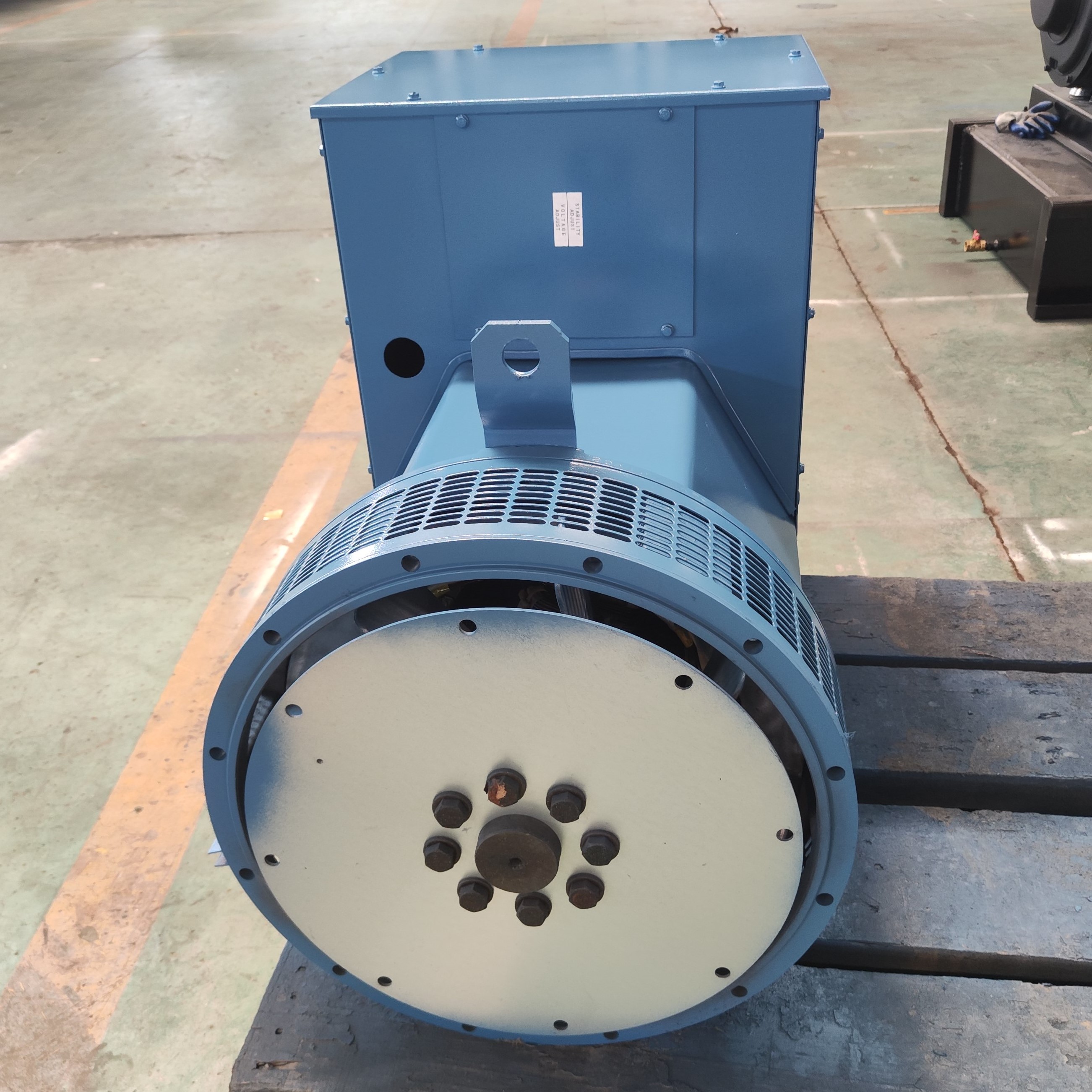
Evaluating the AC Alternator for a Diesel Generator
When specifying equipment, you must move beyond basic kVA ratings. The nameplate rating only tells a fraction of the story. You must focus intensely on operational longevity and continuous output power quality.
First, let us examine the physical excitation design. A brushless alternator remains the undisputed industry standard for industrial facilities. Older, brushed designs rely on physical carbon brushes pressing against a slip ring. These carbon brushes wear out quickly and require constant replacement. They also generate hazardous friction sparks. Brushless models eliminate this physical friction point entirely. They prevent sparking, making them safe for volatile applications. They also drastically reduce mandatory maintenance intervals, keeping your facility online longer.
Next, we evaluate electrical efficiency and internal insulation. The winding pitch plays a massive role in power quality. A 2/3 winding pitch helps reduce harmonic distortion in the electrical wave. It prevents third-order harmonics from overheating the neutral wire. This keeps the electrical sine wave clean, protecting sensitive IT servers and medical equipment.
Insulation class dictates how much internal heat the windings can survive. Class H and Class F are the most common industrial standards. Class H insulation tolerates higher peak temperatures than Class F. It allows the alternator to handle temporary motor-starting overloads without melting the internal winding lacquer.
Finally, we must emphasize voltage regulation. An Automatic Voltage Regulator (AVR) acts as the central brain of the electrical output. It constantly monitors and adjusts the magnetic field. The AVR maintains clean, steady power when facility loads fluctuate wildly. We frame a high-quality AVR as a critical risk-mitigation feature. It prevents dangerous voltage spikes from destroying your downstream equipment.
Verify the alternator utilizes a modern brushless excitation system.
Confirm the winding pitch matches your harmonic distortion limits.
Check if the insulation class supports your expected overload scenarios.
Ensure the AVR provides rapid response times to heavy transient loads.
Sizing and Specifying the Radiator Cooling System
A standard off-the-shelf radiator rarely suffices for extreme climates. Heavy-duty industrial applications demand rigorous, site-specific thermal engineering. You must size the genset radiator accurately to match your local geographical environment.
Let us compare ambient temperature ratings. Standard commercial radiators usually carry a design rating for 40°C (104°F) ambient air. This rating works perfectly fine in mild, temperate zones. However, tropical or extreme environment radiators boast ratings of 50°C (122°F) or even higher.
Buyers often make a critical implementation error here. They fail to account for the actual temperature inside the acoustic enclosure. The operating air inside a sound-attenuated canopy is often 10 to 15 degrees Celsius hotter than the outside ambient air. If the local weather station reports 40°C outside, your internal radiator fan might pull 55°C air across the cooling fins. If you specified a standard 40°C radiator, your system will overheat instantly.
Next, evaluate the physical cooling system architecture. Engineers typically choose between copper-brass and aluminum core units. Standard copper-brass cores offer excellent field repairability. Mechanics can solder them easily on-site. Aluminum cores provide superior thermal conductivity and weigh significantly less. You must balance these traits based on your operational environment.
Industry standards dictate strict derating curves for cooling packages. These standard guidelines show exactly how much load capacity drops per degree of temperature rise. Once you exceed the radiator's maximum design limit, the engine controller intervenes. It automatically reduces fuel input to lower the combustion temperature. This protects the engine block, but it starves your facility of necessary power.
Comparison of Radiator Core Architectures
Core Material | Thermal Conductivity | Weight Profile | Corrosion Resistance | Best Application |
|---|---|---|---|---|
Copper-Brass | Moderate to High | Heavy | High (with proper coatings) | Stationary industrial prime power |
Aluminum | Excellent | Lightweight | Moderate (vulnerable to galvanic corrosion) | Mobile rental fleets, weight-restricted sites |
Real-World Risks of Mismatched Generator Components
What happens when an equipment builder attempts to cut corners? Mismatching a high-end diesel engine with budget electrical components creates immediate operational liabilities. Let us examine the implementation realities of these engineering missteps.
Scenario 1 involves catastrophic thermal overload. Imagine a facility running at peak capacity during a summer heatwave. An undersized diesel generator cooling system fails to reject the mounting engine heat. The coolant temperature spikes rapidly. The engine's electronic control module detects this dangerous thermal rise. It immediately initiates a protective hard shutdown. This mechanism saves the physical engine block from melting. However, it causes sudden, critical downtime for the entire facility. Your operations halt simply because the radiator lacked sufficient surface area.
Scenario 2 highlights destructive voltage sag under load. Facilities frequently start large electric motors, such as industrial HVAC compressors or water pumps. These actions create massive transient inrush loads. A poorly specified AC alternator for diesel generator fails to handle this sudden magnetic demand. The voltage drops significantly across the local grid. This severe voltage sag causes system-wide breaker trips and resets sensitive PLCs.
We must view all component specifications through a highly skeptical lens. Avoid marketing claims that any single component is entirely failure-proof. Ultimate reliability does not come from glossy brochures. It comes from engineered margins of safety. You must maintain a comfortable buffer between the alternator's thermal limit and the radiator's maximum cooling capacity.
Thermal Derating Impact Chart
Failure Trigger | Immediate Component Reaction | System-Wide Consequence | Prevention Strategy |
|---|---|---|---|
Ambient Temp Exceeds Radiator Rating | Coolant boils, engine ECM detects overheat | Protective shutdown, total facility blackout | Specify 50°C+ tropical radiators for enclosed units |
High Transient Motor Load | Alternator magnetic field collapses briefly | Deep voltage sag, facility breakers trip | Oversize the alternator relative to the engine kW |
How to Vet a Generator Alternator Supplier for Custom Builds
Standard catalog parts often fail to meet strict site compliance or harsh environmental requirements. You need objective criteria for evaluating vendors during your shortlisting process. Partnering with the right manufacturer eliminates massive integration risks.
First, closely assess their baseline engineering capability. Does the supplier offer robust custom generator components? Unique environments demand unique solutions. Coastal and marine environments require heavy epoxy winding treatments to prevent airborne salt corrosion. High-humidity tropical areas demand specialized anti-condensation heaters to keep windings dry during standby periods. A highly specialized generator alternator supplier can engineer these modifications directly into the manufacturing assembly line.
Next, demand rigorous testing and compliance documentation. Never accept unverified performance claims. Look for suppliers who provide comprehensive Factory Acceptance Testing (FAT) data. Ask them to provide thermal imaging reports captured while the unit runs under 100 percent load. They must demonstrate strict adherence to international ISO and IEC manufacturing standards. This transparency ensures the component will perform exactly as rated when it arrives on your site.
Your immediate next-step action involves strict data collection. Advise your engineering and procurement teams to request specific derating tables for your exact altitude and temperature. Demand precise thermal load calculations from the supplier's engineering desk. Do this before finalizing any purchase order or signing contracts. If a vendor cannot provide this data, they are the wrong partner for a custom build.
Conclusion
The ultimate generator set performance represents a delicate, engineered balance. It requires perfect harmony between mechanical power generation, electrical conversion efficiency, and continuous heat dissipation. You cannot prioritize a massive engine while neglecting the electrical and thermal subsystems that support it.
Investing in high-grade electrical ends and environment-matched cooling packages is never an added expense. These components act as a physical insurance policy. They protect your facility against premature equipment failure and highly disruptive operational downtime.
Audit your current equipment specifications against your actual local peak summer temperatures.
Consult with specialized mechanical engineers to verify your canopy airflow dynamics.
Match the exact electrical hardware to your facility's specific transient load profile.
Demand transparent testing data from all your component vendors before purchase.
FAQ
Q: How does an undersized genset radiator affect the AC alternator?
A: An undersized radiator fails to cool the engine, leading to elevated ambient temperatures inside the generator canopy. This excess heat prevents the alternator from cooling itself efficiently, forcing it to derate its power output to prevent winding insulation failure.
Q: Why is a brushless alternator preferred for industrial generator sets?
A: Brushless designs eliminate physical friction parts (carbon brushes), which drastically reduces maintenance needs, prevents arcing, and provides a more stable, reliable power output essential for continuous industrial applications.
Q: Can I upgrade my diesel generator cooling system without changing the alternator?
A: Yes, replacing or upgrading to a high-ambient radiator is possible and recommended for extreme climates. However, the engine's water pump and the canopy's airflow design must be able to accommodate the new radiator's flow requirements and physical footprint.
Q: What should I look for in a custom generator components supplier?
A: Look for transparent testing documentation, ISO certifications, the ability to engineer components for specific environmental challenges (like marine-grade coatings), and a proven track record of integrating seamlessly with major engine brands.


