


Why Containerized Generator Sets Are Ideal for Mining & Oilfield Projects
Views: 0 Author: Site Editor Publish Time: 2026-08-21 Origin: Site


Mining and oilfield operations require reliable, high-capacity power in remote locations.These harsh environments frequently lack access to the public power grid, with only minimal basic infrastructure available. Delivering reliable on‑site power presents a major challenge. Traditional open‑skid generator units often fail under such operating conditions. Permanent power plants are also inadequate: they cannot satisfy the rapid‑mobilization requirements of modern extraction activities, nor can they meet the extreme durability standards required by heavy‑industry sectors.
Containerized generator sets provide a modular, weather-resistant power solution that is easy to transport and well suited to demanding remote sites. This guide assesses their technical feasibility and financial performance, while examining real‑world implementation considerations for heavy‑industrial procurement. It explains how these systems enable rapid deployment and streamline long‑term operational workflows.
Key Takeaways
Rapid Mobilization: ISO‑standard containerized construction eliminates custom powerhouse builds, cutting deployment timelines by weeks.
Durability for Harsh Environments: IP‑rated enclosures safeguard critical prime‑power assets against abrasive mining dust, seismic vibration, and extreme oilfield temperature fluctuations.
Scalable Architecture: Modular designs allow operators to synchronize multiple containerized generator sets to match shifting power demands across project lifecycles, from exploration through full‑scale production.
Favorable Total Cost of Ownership: Higher upfront CAPEX can be offset by lower installation costs, simpler maintenance, and the ability to move the equipment to other project sites.
Business Challenge: Powering Remote High‑Load Operations
Heavy‑duty equipment draws massive volumes of continuous electricity. Drill rigs, deep‑shaft ventilation systems, and rock‑crushing plants impose enormous electrical loads and require stable voltage for proper function. Unplanned power outages directly erode daily revenue; every minute of downtime translates into lost production volume. Operators cannot tolerate grid instability and require round‑the‑clock, dependable energy sources.
Logistics create another substantial obstacle for heavy industry. Transporting power infrastructure to off‑grid sites is complex. Convoys traverse rough terrain and unpaved, deteriorated roads, and steep freight costs quickly consume project budgets. Standard open‑skid units are prone to damage during these arduous transit cycles, requiring hardware robust enough to survive long‑haul transportation.
Infrastructure gaps compound these difficulties. Constructing permanent housing for conventional generators is time‑intensive, involving concrete foundation pouring and specialized labor to build weather‑proof enclosures. These lengthy construction workflows conflict with fast‑track exploration schedules and unnecessarily delay early‑phase production targets. Operators need faster power‑deployment alternatives without constructing permanent physical plants.
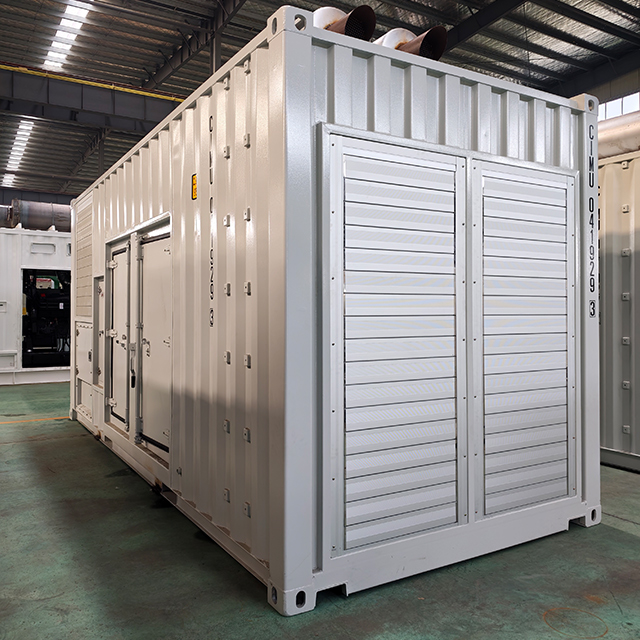
Evaluating Containerized Generator Sets Against Industrial Extremes
Environmental Ingress Protection and Weather Resistance
Abrasive dust rapidly wears heavy machinery, while saline moisture aggressively corrodes coastal oilfield equipment. Prime‑power engines must be shielded from these persistent threats. Custom louvers deflect flying debris; motorized dampers fully seal the enclosure during severe sandstorms; heavy‑duty air‑filtration systems trap microscopic particulates. These measures help reduce engine wear and extend service life in dusty and corrosive environments.
Manufacturers build these units around standard ISO container footprints, most commonly 20 ft, 40 ft and 40HQ sizes. Outer shells are fabricated from heavy‑gauge Corten steel with excellent atmospheric‑corrosion resistance. Marine‑grade anti‑corrosive paint provides an additional critical barrier against salt spray and high humidity, preventing rust from compromising structural integrity.
Vibration, Acoustic Control and Thermal Management
Heavy‑industrial generators generate intense noise and vibration that endanger worker safety and violate strict OSHA and MSHA noise regulations, making acoustic attenuation essential. Thick rock‑wool insulation lines container interior walls, and exhaust systems are fitted with industrial‑grade silencers to substantially lower decibel output, allowing safe on‑site personnel operation without hearing‑damage risk.
Thermal management represents another serious engineering hurdle. Arctic conditions freeze engine blocks and critical fluid circuits, while desert oilfield environments push coolant temperatures beyond safe operating limits. Integrated block heaters maintain engine temperatures during standby for cold‑climate deployments. Oversized tropical radiators dissipate heat rapidly under maximum load, sustaining safe engine operation in scorching hot climates.
Financial Analysis: CAPEX versus OPEX in Heavy Industry
Procurement teams must balance upfront capital expenditure against recurring operating costs. Containerized systems deliver compelling financial advantages that shift this equation favorably.
Open‑frame units may appear cheaper at first glance, yet on‑site integration costs can escalate rapidly. They demand custom housing and complex field wiring. Containerized generator sets can arrive largely pre-wired and factory-tested, with switchgear integrated into the system. Once positioned on‑site, only main‑cable connections are required. This eliminates expensive field labor and lengthy commissioning delays.
Heavy‑industry projects operate within finite lifecycles. Mine ore bodies are eventually depleted, and oil wells are eventually capped. Permanent power plants become stranded assets in these scenarios, as concrete‑based structures cannot be relocated. Containerized units are depreciable, highly mobile assets. They can be disconnected and lifted with standard flatbed trucks or cranes for redeployment to subsequent project sites. This high mobility greatly improves whole‑life return on investment.
Operating expenditures determine long‑term profitability. Purpose‑built internal features reduce ongoing OPEX burdens. Built‑in service lighting enables round‑the‑clock technician access. Service doors grant safe, quick access to core engine components. Integrated spill‑containment floors automatically capture oil and coolant leaks, preventing ground contamination and costly environmental‑penalty exposure.
Scalability and Microgrid Integration
Power requirements fluctuate throughout project lifecycles. Early‑phase drilling places moderate electrical demand, while peak production imposes very high loads. It is common practice to over‑specify single generators for peak‑demand scenarios, which wastes fuel during light‑load conditions and can cause severe engine glazing. Modular power scaling solves this challenge. Advanced parallel load‑sharing controllers synchronize multiple units seamlessly. Additional generators come online as consumption rises, and surplus units are taken offline as operations wind down.
Modern industrial sites face pressure to reduce carbon footprints, and long‑term mining assets are subject to stringent global emissions targets. Containerized generator sets integrate smoothly into microgrid architectures. They pair effectively with Battery Energy Storage Systems (BESS) and large‑scale solar arrays. Generators supply base‑load power or cover peak‑demand spikes, while batteries handle lighter loads to cut diesel consumption. This hybrid approach can significantly reduce diesel consumption.
Implementation Risks and Mitigation Strategies
Deploying heavy‑duty equipment carries inherent risks. Anticipate these challenges and apply proven mitigation measures.
Risk 1: Footprint and Siting Constraints
Reality: ISO containers require level, stable ground and sufficient clearance. Service doors need full opening clearance, and radiators need unobstructed airflow to avoid engine overheating.
Mitigation: Complete thorough pre‑deployment site surveys. Use compacted‑gravel pads to level uneven terrain. Install heavy‑duty steel grillage in deep‑mud conditions. Avoid siting units hard against rock faces.
Risk 2: High‑Altitude Power Derating
Reality: Diesel engines rely on oxygen for combustion. Thin high‑altitude air reduces oxygen availability and causes significant power loss. Copper and gold mines frequently operate at elevated mountain elevations.
Mitigation: Adopt transparent sizing workflows during procurement. Provide exact site‑altitude data to manufacturers. Engineers will configure turbocharger hardware accordingly and supply accurate continuous‑power ratings specific to that elevation.
Risk 3: Fuel Quality and Logistical Challenges
Reality: Remote locations lack premium‑grade fuel‑supply chains. Diesel stored in unconditioned tanks for extended periods absorbs water and accumulates sediment, rapidly damaging high‑pressure fuel injectors.
Mitigation: Specify heavy‑duty filtration within the container scope. Integrate primary and secondary fuel‑water separators to remove moisture and particulates before fuel reaches the engine, protecting high‑value components from premature failure.
Procurement Checklist: Specifying Appropriate Equipment
Technical detail is critical during procurement. Follow this structured framework to select units matched to site requirements.
Capacity and Sizing: First define your real‑world load profile. Prime Power applies to continuous operation under variable loads. Continuous Power describes uninterrupted operation at steady 100 % load. Standby Power is reserved exclusively for emergency use. Mining applications typically require Prime‑Power or Continuous‑Power ratings.
Compliance and Safety Standards: Industrial sites are governed by strict regulatory requirements. Verify all relevant certifications before purchase. ISO 8528 covers general performance criteria; UL 2200 is required for North‑American safety compliance. Oil‑field hazardous‑zone deployments demand ATEX‑certified modifications.
Telemetry and Remote Monitoring: Remote sites rarely maintain on‑site electrical‑engineering staff. Operators need headquarters‑based equipment oversight. Specify intelligent control panels fitted with GSM or satellite‑communication modules to enable proactive predictive maintenance.
Generator Rating Comparison
Rating Type | Load Variability | Running Time limitations | Typical Application |
|---|---|---|---|
Continuous Power (COP) | Constant 100% Load | Unlimited Hours | Base-load mining operations |
Prime Power (PRP) | Variable Load (avg 70%) | Unlimited Hours | Off-grid oilfield drilling |
Standby Power (ESP) | Variable Load | Max 200-500 Hours/Year | Emergency grid backup |
Conclusion
Containerized generator sets successfully combine rapid deployment with ruggedized protection, delivering compelling long‑term financial performance for demanding remote‑extraction industries. IP‑rated enclosures resist harsh environmental stressors. Modular designs support seamless scaling as site operations expand, mitigating weather‑driven downtime and eliminating costly powerhouse construction. Their mobility also makes them a practical option for projects where power requirements and site locations may change.
Assess your upcoming site‑power requirements without delay. Accurately map projected electrical loads. Request site‑specific financial consultations to evaluate potential OPEX savings and explore comprehensive heavy‑industry power‑system solutions. Properly‑specified modular power architectures guarantee operational continuity.
FAQ
Q: What differentiates a generator container from a standard shipping container?
A: A generator container is far more than a simple steel box. Manufacturers implement heavy structural reinforcement to support substantial engine mass. Thick acoustic insulation suppresses intense engine noise. Floors integrate built‑in fuel tanks and purpose‑built spill‑containment bunds. Custom cut‑outs are engineered for specialized ventilation and exhaust routing.
Q: What are the typical sizes for containerized generator sets?
A: Units follow standard ISO dimensions to simplify global shipping. 20 ft containers commonly house units up to 1 000 kVA. Larger 40 ft and 40HQ enclosures accommodate high‑capacity sets ranging from 1 000 kVA to over 3 000 kVA. Standard footprints enable straightforward transport via flat‑bed trucks and ocean‑going cargo vessels.
Q: How do these units cope with extreme desert heat or arctic cold?
A: Purpose‑built internal climate controls handle temperature extremes. Desert‑spec configurations use oversized tropical radiators plus motorized louvers for heat rejection. Arctic-spec units may use insulated enclosures, motorized dampers, block heaters, and suitable coolant to maintain reliable starting and operation in low temperatures.
Q: Can multiple containerized generators be synchronized?
A: Yes. Operators frequently synchronize several units together using advanced parallel load‑sharing controllers to form scalable microgrids. Additional generators automatically come online as power demand rises, delivering built‑in redundancy while minimizing fuel waste during light‑load operating phases.


