


How Silent Diesel Generators Ensure Uninterrupted Power for Construction Sites
Views: 0 Author: Site Editor Publish Time: 2026-08-16 Origin: Site


Construction projects often have to balance two competing requirements. Job sites require heavy-duty, continuous power to keep projects on schedule. At the same time, managers must comply with tightening urban noise regulations and strict workplace-safety rules. Balancing these requirements can create significant logistical challenges for procurement teams and site planners. Conventional open‑frame generators often exceed municipal noise limits, resulting in forced site shutdowns, complaints from local residents and substantial fines. Reliable on‑site power is essential, yet compliance cannot be compromised in densely populated areas. This guide delivers practical technical evaluation for enclosed generator selections. It covers real‑world acoustic performance, load‑handling capacity and on‑site deployment strategies, helping you cut through marketing hype and make sound engineering‑driven decisions for your upcoming projects.
Key Takeaways
Compliance as Primary ROI: Acoustic canopies prevent shutdowns and penalties at urban and residential job sites with noise restrictions.
“Silent” Is Relative: Industry‑standard silent generators register 65‑75 dB(A) at 7 meters — comparable to regular city traffic, rather than complete silence.
Durability Equals Reliability: The canopy of a silent generator serves dual purposes: containing noise leakage and shielding equipment against harsh site conditions including dust, rain and debris.
Sizing Dictates Efficiency: Oversizing causes wet stacking; undersizing triggers voltage drops. Accurate load profiling is indispensable.
Business Context: Power Supply and Compliance Challenges
Urban Noise Ordinances and Operating Hours
Local municipalities rigorously enforce noise‑control rules. Most cities impose a daytime noise limit of 60‑65 dB(A) at property boundaries, with even stricter thresholds for nighttime hours. Open-frame generators can produce over 90 dB(A), which may lead to noise complaints when operated near residential areas.
Non‑compliance carries significant financial risks for projects. Regulators issue heavy fines and frequently order work stoppages until noise issues are resolved. Construction delays follow, while crews remain idle and generate extra costs. Proper acoustic enclosures avoid these expensive disruptions. They enable legal early‑morning and late‑evening shifts, allowing you to maximize daily working hours safely and efficiently.
OSHA / HSE Worker‑Safety Standards
Prolonged exposure to high decibel levels poses safety hazards on site. Personnel working near open‑frame engines experience accelerated fatigue. Standard safety regulations cap unprotected noise exposure at 85 dB(A) over an 8‑hour shift. Exceeding this threshold rapidly impairs situational awareness.
Excessive noise also disrupts critical on‑site communication. Crane operators and ground riggers rely on clear radio instructions; masked signals create immediate physical dangers for all site personnel. Enclosed generator solutions act as a key risk‑mitigation measure. They can reduce noise exposure around the generator and help create a safer working environment. However, additional measures such as hearing protection, noise monitoring, and site-specific controls may still be required.
Demystifying the Technology Behind a Silent Generator Set
Acoustic Engineering vs. Marketing Claims
Manufacturers frequently use the word "silent" in their marketing materials. Absolute silence remains physically impossible for large diesel engines. You must understand the actual physics of noise reduction to make informed choices. True acoustic engineering relies on three distinct principles: sound absorption, sound deflection, and vibration isolation.
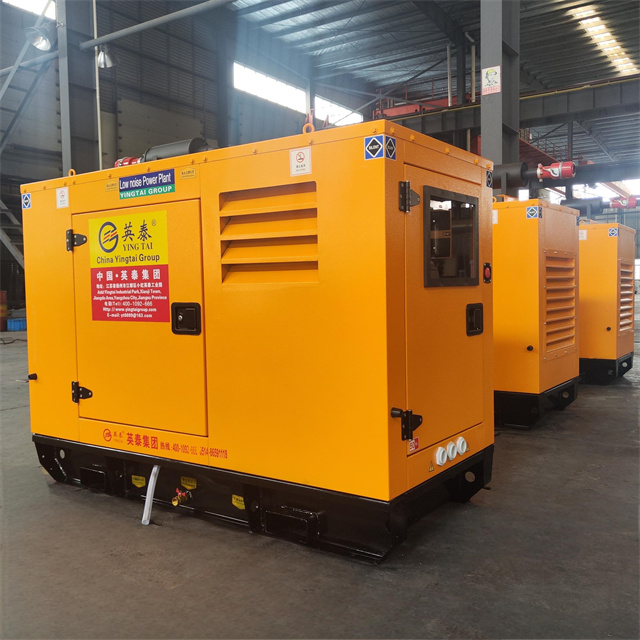
A high-quality system uses heavy-gauge steel enclosures. Engineers line these steel walls using thick, fire-retardant acoustic foam. The foam absorbs high-frequency engine whining. Meanwhile, internal steel baffles deflect low-frequency thumping noises back into the main enclosure. Finally, engineers mount the engine block on heavy-duty rubber isolators. These mounts prevent mechanical vibrations from transferring to the outer chassis and resonating outward. This combination of acoustic treatment, exhaust attenuation, and vibration isolation can significantly reduce generator noise, with actual performance depending on the enclosure design, generator load, and measurement distance.
Exhaust and Airflow Management
Acoustic enclosures must manage extreme heat effectively. Engines require massive amounts of air for combustion and continuous cooling. Wrapping a hot engine inside a steel box creates serious thermal challenges. Engineers solve this using critical-grade mufflers and baffled air routing systems.
Critical-grade mufflers force exhaust gases through multiple expansion chambers. This process softens the loud exhaust bark before releasing the air into the environment. The enclosure features specially designed intake and exhaust louvers. They allow cool air to enter while preventing sound waves from escaping.
We must note a transparent operational assumption here. Reduced airflow designs demand strict adherence to maintenance schedules. If dust clogs the acoustic louvers, internal temperatures rise rapidly. The engine will undergo thermal derating to protect itself. You lose critical power output if you neglect routine airflow maintenance.
Silent vs. Open Frame: Evaluating Site-Specific ROI
Upfront Cost vs. Operational Savings
Procurement teams will immediately notice the price gap. Enclosed units carry a 15%‑30% cost premium over standard open‑frame generators. You may hesitate to approve this higher initial capital outlay. Nevertheless, you must weigh this premium against tangible long‑term operational savings.
For open‑frame units, temporary acoustic barriers have to be built. Costly sound‑absorbing blankets and custom scaffolding are required. These temporary noise‑reduction solutions incur material expenses and consume substantial man‑hours for installation. If local authorities restrict working hours due to noise violations, labor inefficiency will surge dramatically. Requiring no secondary soundproofing work, enclosed generators are ready‑to‑use on delivery. They quickly offset the initial purchase premium by enabling longer operating windows.
Cost Savings Comparison Chart
Expense Category | Open Frame Requirements | Enclosed Unit Advantage |
|---|---|---|
Temporary Sound Barriers | Requires custom scaffolding and blankets | Reduced need for external sound barriers |
Fines and Penalties | High risk of municipal noise fines | Compliant with standard city limits |
Labor Efficiency | Restricted to mid-day working hours | Enables early morning and night shifts |
Environmental Durability Under Harsh Site Conditions
Construction sites feature extremely harsh operating conditions. Cement dust, flying debris and heavy rain constantly assault exposed equipment. Open‑frame generators suffer accelerated wear under such exposure. Moisture damages alternator windings, while fine contaminants compromise precision fuel‑delivery components.
The acoustic canopy delivers a valuable secondary function: acting as a heavy‑duty weather‑protective shell. Its robust steel enclosure keeps mud and moisture away from critical internal assemblies, greatly extending the service life of alternators and engine blocks. Reliable power output is maintained even during heavy rain or high‑dust excavation work. The canopy protects your capital investment against premature environment‑related failures.
Evaluation Criteria for Shortlisting Silent Diesel Generators
Load Profiling for Heavy‑Duty Equipment
Accurate load profiling is absolutely critical. Heavy construction machinery draws large inrush surge current on startup. Tower cranes and industrial concrete pumps require sudden power surges to overcome initial inertia, after which their power consumption drops significantly. You need to carefully calculate both starting surge wattage and continuous operating wattage.
Sizing purely according to running wattage will result in engine stall upon startup. Conversely, many project managers fall into the under‑loading trap: deploying high‑capacity generators to run small hand‑held tools. Operating a diesel engine below 30 % load triggers wet stacking. Unburned fuel and carbon rapidly accumulate inside the exhaust system, reducing engine efficiency and creating serious fire hazards.
Equipment Power Demand Summary
Equipment Type | Surge Power Multiplier | Sizing Recommendation |
|---|---|---|
Tower Cranes | 3x to 4x Running Watts | Requires high alternator step-load capacity |
Industrial Welders | 1.5x to 2x Running Watts | Steady output, moderate surge handling |
Site Lighting Towers | 1.2x Running Watts | Minimal surge, ideal for base-load management |
Fuel Autonomy and Service Accessibility
Uninterrupted power supply relies on sufficient fuel runtime. Check base‑mounted tank capacities thoroughly before deployment. Most OEMs supply standard tanks rated for 8‑, 12‑ or 24‑hour continuous operation. For overnight shifts, a 24‑hour tank eliminates risky midnight refueling.
In addition, canopy design must not obstruct routine maintenance. Prioritize models with lockable, wide‑access service doors. Technicians carry out daily oil‑level checks, inspect coolant lines and replace heavy‑duty fuel filters. Narrow canopy openings encourage maintenance crews to skip these essential tasks, which may lead to catastrophic engine failure. Select units with oversized access panels and built‑in interior lighting to simplify daily servicing.
Engine and Alternator Build Quality
Internal components determine overall system reliability. Specify well‑established engine platforms and high‑grade alternators. Unbranded low‑cost components tend to fail under heavy industrial loads, triggering immediate total site power loss.
Prioritize local spare‑parts availability over marginal cost savings. If a fuel pump fails, replacement parts must be obtainable locally at short notice. Reputable brands maintain extensive regional distribution networks, shortening Mean Time To Repair (MTTR). Fast repair turnaround restores site power within hours instead of weeks. Never compromise engine quality for a marginally lower purchase price.
Implementation Realities and Deployment Risks
Site‑Placement Strategy
Physical placement heavily influences generator performance. Units cannot simply be dropped into random open corners. Rigorous positioning guidelines must be provided to rigging crews.
Key placement rules:
Maintain airflow clearance: Keep a minimum of two‑metre open space around intake louvers to avoid air starvation.
Route exhaust properly: Direct hot exhaust outlets away from site‑office windows and air‑intake vents to safeguard worker health.
Avoid reflective surfaces: Do not position units hard against concrete retaining walls. Solid masonry reflects sound waves and amplifies on‑site noise levels.
Following these basic positioning rules optimizes both cooling efficiency and acoustic attenuation.
Preventive Maintenance in High‑Dust Environments
Real‑world site conditions must be taken into account. Enclosed generators can operate at higher internal temperatures than open-frame units if airflow and ventilation are not properly designed.In dusty construction environments, trapped heat creates additional risks. Cement‑laden dust quickly clogs radiator fins.
Enforce strict radiator‑cleaning schedules. Technicians should inspect and clean the radiator fins regularly, with the frequency adjusted to site dust levels and the manufacturer's maintenance instructions. Air‑filter replacement intervals must be substantially shortened compared to standard factory operating conditions. Neglected filters allow dust ingestion, leading to engine choking, overheating and unplanned shutdown during peak‑demand hours. Proactive maintenance enables enclosed generators to survive the harsh conditions of active excavation sites.
Conclusion
Investing in enclosed generator systems represents a robust risk‑management strategy. It balances reliable power‑supply requirements against stringent regulatory compliance. Costly municipal fines are avoided, worker health is protected, and power output remains uncompromised.
Before finalizing procurement, carry out a comprehensive site‑specific load audit. Accurately quantify surge‑power demands for cranes and pumping equipment. Meanwhile, review local municipal noise ordinances to confirm exact decibel limits at property boundaries. With this data gathered, you can define precise technical specifications when issuing your next RFQ.
FAQ
Q: What decibel level can I expect from a “silent” diesel generator?
A: Absolute silence is unachievable for industrial engines. Industry‑standard silent generators typically measure 65‑75 dB(A) at a 7‑metre distance, comparable to regular city‑traffic noise or a running vacuum cleaner. Exact noise output depends heavily on the generator’s kVA rating and the build quality of its acoustic canopy.
Q: Will the acoustic canopy reduce power output or cause overheating?
A: Acoustic enclosures alter thermal behaviour, yet high‑quality canopies mitigate this effectively. Reputable manufacturers deploy forced‑draft cooling and baffled louvers to maintain safe operating temperatures without power derating. Poorly‑engineered low‑cost enclosures restrict airflow. Under high‑ambient‑temperature conditions, insufficient airflow causes overheating and automatic power derating for component protection.
Q: Should construction‑site silent generators be rented or purchased?
A: This decision depends heavily on project timelines and cross‑site re‑utilisation. For short‑term projects under six months, renting preserves upfront capital and transfers maintenance responsibilities to the rental supplier. For multi‑year developments or successive project cycles, purchasing delivers better financial returns. Ownership builds long‑term asset value and lowers ongoing operational expenditure.
Q: How does a silent canopy affect routine maintenance work?
A: Internal‑space constraints make routine servicing slightly more complex for enclosed units. Although manufacturers fit wide lockable access doors, working space remains confined. Service technicians must navigate acoustic baffles to reach oil filters and coolant drains. Deploy maintenance personnel experienced with enclosed‑generator servicing to prevent accidental damage to sound‑absorbing materials.


